







Official Census Data May Be Missing Millions in Rural Areas, New Study Suggests
Researchers Find Major Gaps Between Official Census Data and On-the-Ground Population Records
A new international study is raising questions about the accuracy of Official Census Data used by governments and global organizations to estimate population figures around the world.
Researchers from Aalto University analyzed more than 300 dam-related resettlement projects across 35 countries and discovered that widely used population datasets may have significantly undercounted rural populations for decades.
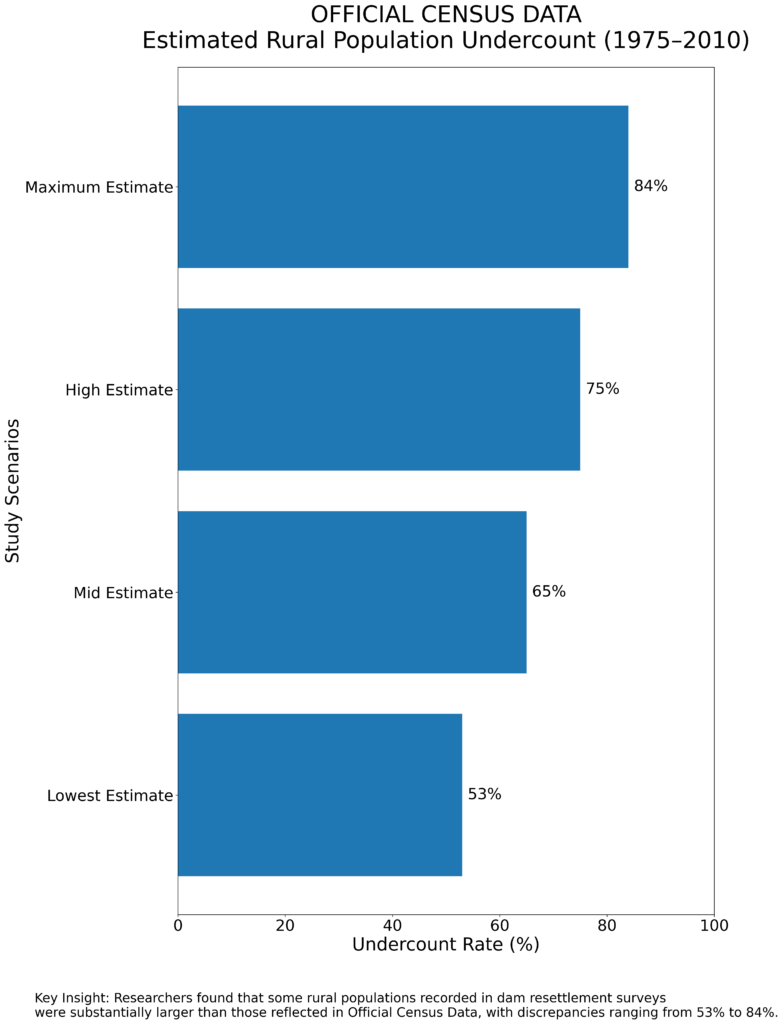
The findings, published in Nature Communications, suggest that some rural communities may be underrepresented by as much as 84%.
The study compared Official Census Data and global population databases with detailed records collected during dam construction projects.
Because displaced residents must be identified and compensated, these projects often require highly accurate, household-level population counts.
When researchers compared these local records against major population datasets, they found substantial discrepancies, particularly in remote rural regions.
“If large portions of rural populations are missing from Official Census Data, it could affect everything from healthcare planning to infrastructure investment.”
Why the Findings Matter
Governments rely heavily on Official Census Data to determine how public resources are distributed.
Population figures influence decisions involving:
- Healthcare services
- School construction
- Transportation networks
- Electricity and water infrastructure
- Emergency response planning
- Development funding
If rural communities are consistently undercounted, they may receive fewer resources than they actually need.
Researchers believe these gaps may stem from the challenges of conducting censuses in isolated regions, where limited funding, difficult terrain, and weak administrative systems can make accurate counting extremely difficult.
Analytical Snapshot: Study Findings
| Measurement | Finding |
|---|---|
| Countries Analyzed | 35 |
| Dam Projects Reviewed | 300+ |
| Study Period | 1975–2010 |
| Estimated Rural Undercount | 53%–84% |
| Data Source Used for Verification | Dam resettlement population records |
| Published In | Nature Communications (2026) |
Estimated Population Gap Identified
Potential Rural Population Undercount

84% | ██████████████████████████████████
75% | ████████████████████████████
65% | ████████████████████████
53% | ███████████████████

Range identified by researchers when comparing
local project records against Official Census Data.
Experts Urge Caution
Despite the striking findings, demographers caution against concluding that the world’s population is dramatically larger than current estimates suggest.
A discovery of billions of previously uncounted people would conflict with numerous independent indicators, including:
- Birth and death registrations
- Agricultural production figures
- Consumer spending patterns
- Economic growth data
- Household surveys
Experts say the discrepancies identified in the study may reflect localized weaknesses in Official Census Data rather than evidence that the global population has exceeded current projections.
A Call for Better Population Tracking
The study highlights the growing importance of improving Official Census Data, particularly in rural and underserved regions.
Researchers argue that combining traditional census methods with satellite imagery, digital mapping, and local administrative records could produce more accurate population estimates in the future.
While the research does not prove that billions of people are missing from global population counts, it does suggest that some of the world’s most vulnerable communities may be less visible in demographic statistics than previously believed.
As governments increasingly depend on Official Census Data to guide policy decisions, ensuring accurate population counts remains a critical challenge for the decades ahead.