







Gas Cylinder New Rules: What Every LPG Consumer Must Know About the Latest Advisory
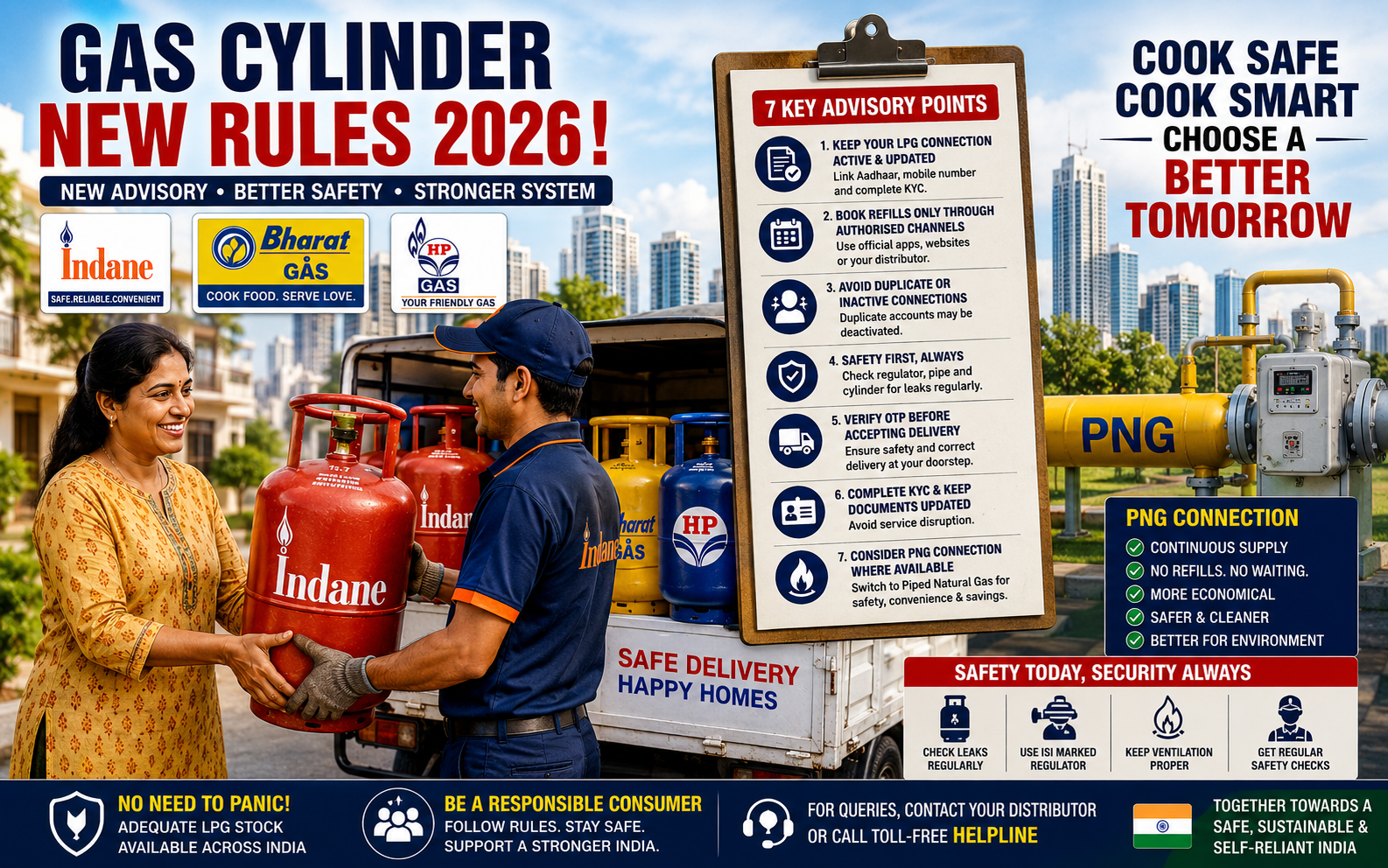
India’s leading oil marketing companies (OMCs) including Indian Oil, BPCL and HPCL have rolled out a fresh advisory for domestic LPG consumers, bringing renewed attention to refill rules, connection status, and the gradual push towards piped natural gas (PNG) in urban areas.
click to download this brochure to your mobile phone
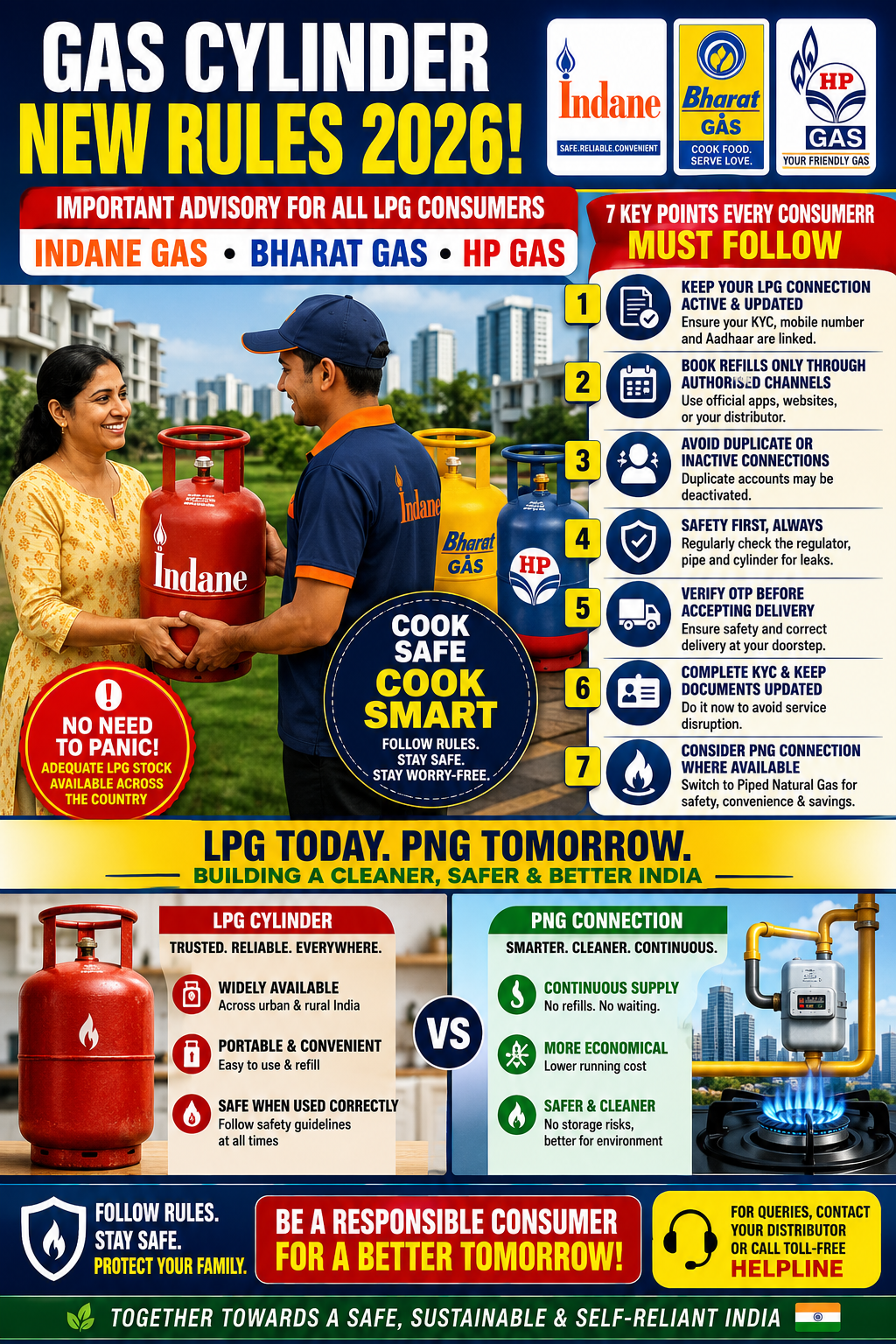

The advisory affects customers using Indane Gas, Bharat Gas, and HP Gas connections across the country.
The latest update comes at a time when millions of households continue to depend on LPG cylinders for daily cooking needs, even as energy companies promote cleaner and more streamlined alternatives like PNG.
What Are the New Gas Cylinder Rules?
Under the updated advisory, oil marketing companies have highlighted several important points for LPG users.
These are not entirely new laws but operational and compliance guidelines designed to improve safety, prevent misuse, and streamline cylinder distribution.
The Gas Cylinder New Rules mainly focus on:
- Ensuring only active LPG connections remain operational
- Encouraging timely refill bookings
- Preventing duplicate or inactive consumer accounts
- Promoting safer usage practices
- Supporting PNG migration in eligible cities
- Maintaining proper KYC and customer verification
- Improving transparency in LPG delivery systems
According to reports, OMCs have also reassured consumers that there is currently adequate LPG stock and no immediate shortage concerns.
Why PNG Is Becoming a Major Focus
One of the key highlights of the advisory is the increasing emphasis on PNG connections, particularly in metro cities and urban regions where pipeline infrastructure is expanding rapidly.
BPCL, one of the country’s major fuel retailers, has reportedly introduced offers encouraging LPG users to shift from cylinders to PNG where available.
PNG is being promoted because it offers:
- Continuous gas supply without refill bookings
- Reduced dependence on cylinder deliveries
- Lower storage risks inside homes
- Potentially lower long-term operating costs
- Better convenience for urban households
However, LPG cylinders remain the primary cooking fuel in vast rural and semi-urban parts of India where PNG infrastructure is still limited.
What Consumers Should Do Immediately
Experts say consumers should avoid panic and instead verify that their LPG accounts remain updated and active.
Important steps consumers should follow:
- Ensure Aadhaar and mobile number are linked to the LPG account
- Complete pending KYC updates if required
- Book refills only through authorised platforms
- Avoid keeping duplicate LPG connections
- Check subsidy status regularly
- Verify delivery OTPs before accepting cylinders
- Follow standard cylinder safety practices at home
The Gas Cylinder New Rules also underline the importance of maintaining proper customer records to avoid disruptions in service.
LPG Prices Remain a Key Concern
While the latest advisory focuses largely on operational rules, consumers continue to watch LPG prices closely. Domestic LPG prices have remained largely stable in several regions in recent months, though commercial cylinder rates have shown fluctuations.
For many middle-class families, cooking gas remains one of the most sensitive household expenses. Even small changes in refill costs directly affect monthly budgets.
In several cities, domestic 14.2 kg LPG cylinder prices currently remain above ₹900.
Safety Remains the Core Objective
Officials maintain that the revised advisory is primarily intended to strengthen consumer safety and improve system efficiency rather than create inconvenience.
“The objective is to ensure genuine users receive uninterrupted LPG supply while maintaining safety and transparency across the distribution network.”
Consumers are also being advised to inspect rubber tubes, regulators, and cylinder seals regularly to avoid leakage risks inside homes.
No Need for Panic Among Consumers
Despite widespread discussions online, there is currently no official nationwide order stating that all LPG users must immediately surrender their connections. However, inactive or duplicate accounts may come under closer scrutiny in the future.
The Gas Cylinder New Rules should therefore be viewed more as a compliance and safety exercise rather than a sudden restriction on household LPG usage.
For now, households using Indane Gas, Bharat Gas, and HP Gas can continue booking cylinders as usual while ensuring their documentation and account details remain updated.