







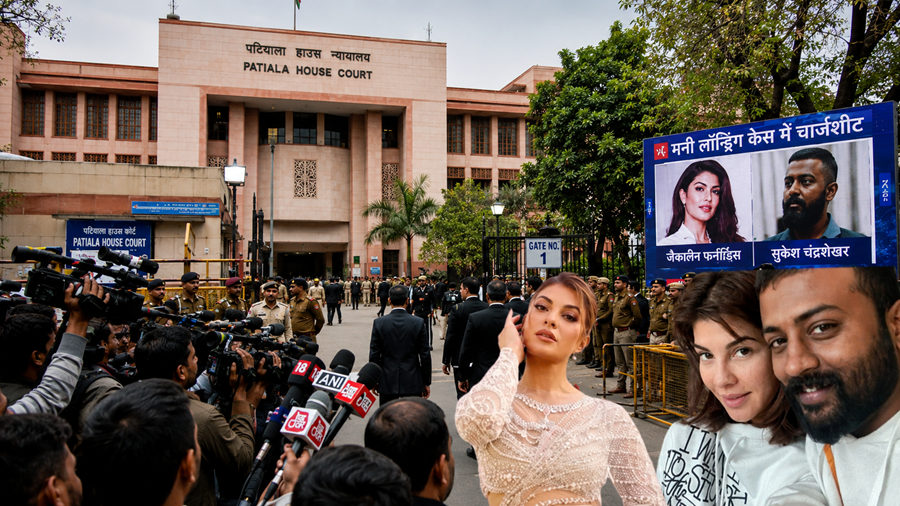
Jacqueline Fernandez Money Laundering Case: The Case That Has Gripped Bollywood and India’s Financial Crime Agencies
The Jacqueline Fernandez money laundering case entered a crucial legal phase after a Delhi court ordered the framing of charges against alleged conman Sukesh Chandrasekhar, actress Jacqueline Fernandez, and multiple co-accused in a sprawling extortion and money laundering investigation worth more than ₹215 crore.

The decision by the Patiala House Court does not amount to a conviction.
However, it means the court believes there is sufficient evidence to proceed with a full criminal trial under the Prevention of Money Laundering Act (PMLA).
The case has attracted national attention because it combines celebrity involvement, allegations of organized crime, prison-based fraud operations, shell companies, and one of India’s largest recent extortion investigations.
Key Developments in the Case
- Delhi court ordered charges against Sukesh Chandrasekhar, Jacqueline Fernandez, and multiple co-accused.
- The case involves alleged extortion of over ₹200 crore and subsequent money laundering.
- Evidence cited includes call records, statements, digital chats, and financial trails.
- Charges under the Prevention of Money Laundering Act (PMLA) have been ordered.
- Separate organized crime-related charges have also been considered against several accused
How the Alleged ₹215-Crore Fraud Was Carried Out
According to investigators, Sukesh Chandrasekhar allegedly operated a sophisticated fraud network while lodged inside Delhi’s Tihar Jail.
Authorities claim he impersonated senior government officials and promised to secure legal relief for businessman Shivinder Singh, former promoter of Ranbaxy Laboratories.
The primary complainant, Aditi Singh, wife of Shivinder Singh, allegedly transferred massive sums of money after being convinced that influential government connections could help secure her husband’s release.
Investigators claim the fraud involved:
- Impersonation of senior government officials
- Fake assurances regarding legal and political influence
- Multiple intermediaries and associates
- Shell companies used to move funds
- Layered transactions designed to conceal the source of money
- Luxury purchases allegedly funded through extorted proceeds
The Enforcement Directorate (ED) alleges that the money was subsequently laundered through a network of companies and financial channels before being used to purchase luxury assets and expensive gifts.
The Numbers Behind the Investigation
One of the most striking aspects of the Jacqueline Fernandez money laundering case is the scale of the alleged financial trail.
Financial Snapshot
| Category | Amount |
|---|---|
| Alleged extortion amount | ₹215 crore |
| Value of gifts allegedly linked to proceeds of crime received by Jacqueline Fernandez | Over ₹7 crore |
| Total accused in ED case | 17 |
| Total accused across related proceedings | Around 40 |
| Criminal cases previously linked to Sukesh Chandrasekhar | 31 |
| Cases in which he has reportedly secured bail | 27 |
The court reportedly examined dozens of evidentiary materials, including call detail records, witness testimonies, electronic chats, financial records, and recovered digital communications before concluding that a prima facie case existed.
Why Jacqueline Fernandez Is Facing Charges
The Jacqueline Fernandez money laundering case largely centers on whether the actress knowingly benefited from assets purchased using alleged proceeds of crime.
The ED has argued that Fernandez received luxury gifts, designer items, jewellery, and other expensive assets from Chandrasekhar.
Officials claim these purchases were funded through money obtained from the extortion racket.
Court records referenced in recent proceedings note that Fernandez acknowledged being in contact with Chandrasekhar and receiving gifts from him.
The court observed that these admissions contribute to the suspicion necessary for charges to be framed.
“There is sufficient material on record raising strong suspicion against the accused persons,” the court observed while ordering charges.
Jacqueline Fernandez’s Defence
Throughout the investigation, Fernandez has maintained that she was unaware of any criminal activity allegedly linked to Chandrasekhar.
Her legal team has repeatedly argued:
- She was not involved in the original extortion conspiracy.
- She had no knowledge that the gifts allegedly originated from criminal proceeds.
- There was no criminal intent on her part.
- Receiving gifts alone does not automatically establish participation in money laundering.
Recently, Fernandez attempted to seek approver status in the case, indicating a willingness to assist investigators.
However, the ED strongly opposed the move, arguing she was not merely a witness but an active beneficiary of the alleged proceeds of crime. She later withdrew that plea.
MCOCA Charges Add a Serious Dimension
Beyond money laundering allegations, the court has also ordered charges under the Maharashtra Control of Organised Crime Act (MCOCA) against Chandrasekhar and several others.
MCOCA is typically invoked in cases involving organized criminal syndicates and repeated unlawful activity.
The court reportedly noted Chandrasekhar’s history of criminal cases while observing evidence suggesting continuous unlawful conduct.
Legal experts view the addition of MCOCA provisions as significant because they carry stricter investigative powers and more serious legal consequences.
What Happens Next?
The accused have been summoned for the formal framing of charges, after which the trial process will begin. Prosecutors will seek to establish:
- The source of the alleged extorted funds
- The movement of money through financial channels
- The role of intermediaries
- Whether recipients knew the origin of assets received
- The existence of an organized criminal network
For the Enforcement Directorate, the challenge will be proving knowledge, intent, and financial benefit beyond reasonable doubt.
For the defence, the focus is expected to remain on the argument that receiving gifts does not necessarily prove awareness of criminal proceeds.
Why This Case Matters
The Jacqueline Fernandez money laundering case is no longer simply a celebrity controversy.
It has evolved into a major test of India’s anti-money laundering framework, highlighting how financial crimes can involve digital communications, shell companies, influence networks, and high-profile public figures.
As the trial moves forward, the court’s examination of financial records, digital evidence, and alleged money trails could set important precedents for future money laundering prosecutions in India.