







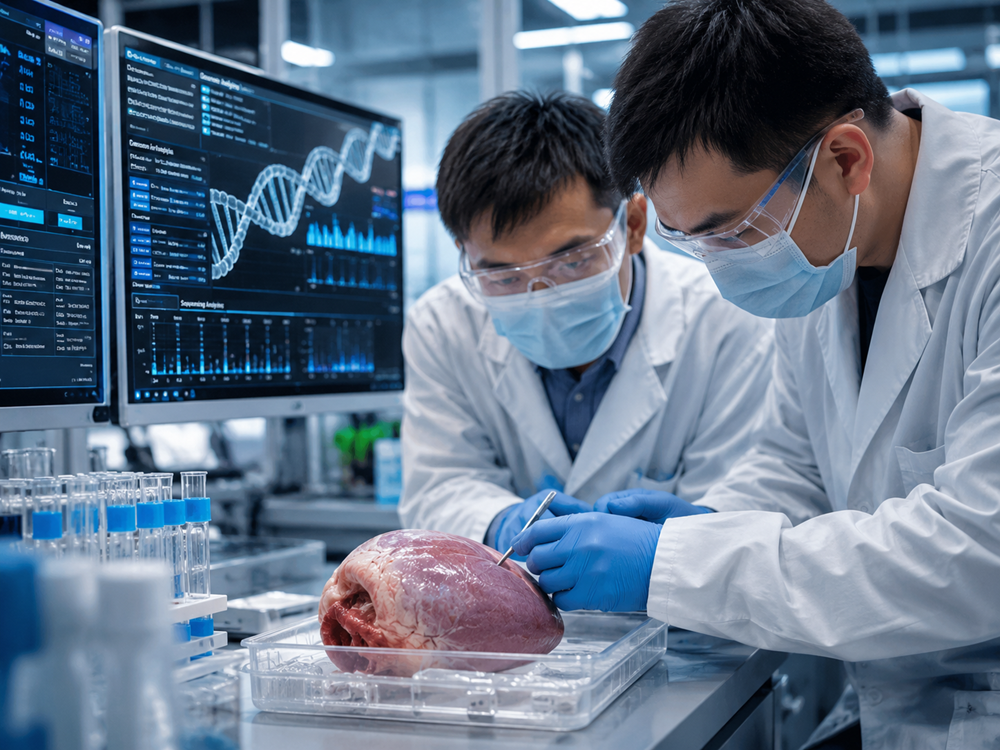
China’s Pig Organ Transplant Breakthrough Offers New Hope for Patients
China has achieved a major medical milestone with a successful pig organ transplant, marking a significant step forward in the rapidly evolving field of xenotransplantation — the transplantation of animal organs into humans.
Researchers and surgeons in China have successfully transplanted genetically modified pig organs into human recipients, demonstrating that these organs can perform essential biological functions inside the human body.

The development is being viewed as a potential solution to the severe shortage of donor organs worldwide.
The latest experiments involved both pig liver and pig kidney transplants, with scientists closely monitoring how the organs functioned after surgery.
Early results showed encouraging signs, including normal blood flow, bile production, and the absence of immediate organ rejection.
Why the Pig Organ Transplant Matters
Every year, thousands of patients die while waiting for a suitable organ donor.
Medical experts believe that a successful pig organ transplant could dramatically reduce waiting times and save countless lives.
Key highlights from the research include:
- Genetically modified pigs were used to improve compatibility with human bodies.
- Transplanted organs showed evidence of functioning inside human recipients.
- No immediate hyper-acute rejection was observed in several cases.
- Scientists believe pig organs could serve as temporary “bridge organs” until human donor organs become available.
How Scientists Made the Pig Organ Transplant Possible
The donor pigs underwent multiple genetic modifications designed to reduce the risk of immune rejection.
Researchers removed certain pig genes and introduced human-compatible genetic traits to help the organs function more effectively in the human body.
In one notable case, a 71-year-old patient with advanced liver cancer received a genetically modified pig liver.
The transplanted organ began producing bile and supporting metabolic functions shortly after surgery, demonstrating the practical potential of pig organ transplant technology.
“This is the first time we tried to determine whether a pig liver could function effectively inside the human body,” said Professor Lin Wang, one of the researchers involved in the groundbreaking study.
Challenges Still Remain
Despite the promising results, experts caution that pig organ transplant procedures remain experimental.
Long-term safety, immune responses, infection risks, and ethical concerns still need further investigation before widespread clinical use becomes possible.
Researchers stress that additional clinical trials and regulatory approvals will be necessary before pig organs can become a routine treatment option.
A Potential Solution to the Global Organ Crisis
Medical researchers around the world are closely watching China’s progress.
If future studies continue to show positive outcomes, pig organ transplant technology could transform modern medicine and provide a lifeline to patients suffering from end-stage organ failure.
While the field is still in its early stages, this breakthrough represents one of the most important developments in transplant medicine in recent years and may eventually help solve one of healthcare’s most persistent challenges — the shortage of donor organs.