







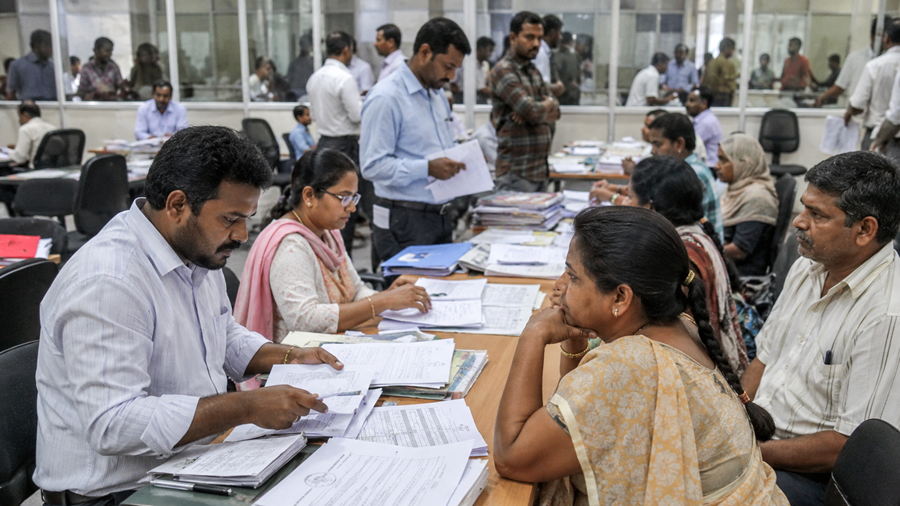
Telangana Voter Roll Anomalies Ahead of Special Intensive Revision
Telangana’s ongoing voter verification exercise has revealed significant discrepancies in the state’s electoral rolls, with more than 88 lakh voter records flagged for verification ahead of the upcoming Special Intensive Revision (SIR).
Quick Summary
- Telangana has flagged over 88 lakh voter records with anomalies during pre-SIR mapping.
- Medchal-Malkajgiri reported the highest district-level anomaly rate.
- Quthbullapur recorded the highest constituency-level anomaly percentage.
- Several Hyderabad-region constituencies showed unusually high discrepancy levels.
- Officials expect most cases to be resolved through document verification and hearings.
- The Special Intensive Revision (SIR) will begin on June 25.
Key Facts
| Item | Details |
|---|---|
| Exercise | Pre-Special Intensive Revision (SIR) |
| Total Electors in Telangana | 3.39 Crore |
| Electors Mapped | 2.32 Crore |
| Mapping Coverage | 68.7% |
| Anomalies Flagged | 88,13,207 |
| Highest Constituency Anomaly Rate | Quthbullapur (78%) |
| SIR Start Date | June 25, 2026 |
| Authority | Election Commission of India & Telangana CEO |
The findings have placed Medchal-Malkajgiri district and several fast-growing Hyderabad-region constituencies at the center of the state’s electoral data cleanup effort.
Election officials say the anomalies do not automatically indicate invalid voter registrations. Instead, they highlight records requiring verification before the publication of updated electoral rolls.
What Happened?
As part of preparations for the Special Intensive Revision, election authorities conducted a large-scale voter mapping exercise across Telangana.
The exercise compared existing voter information with earlier electoral databases and family-linked records.
By June 4, officials had mapped more than 2.32 crore electors, representing approximately 68.7% of Telangana’s total electorate of 3.39 crore.
During the process, authorities identified 88,13,207 voter records that contained one or more anomalies requiring further scrutiny.
Among all Assembly constituencies, Quthbullapur in Medchal-Malkajgiri district recorded the highest anomaly rate at 78%, significantly above the statewide average of 37%.
Other constituencies reporting high anomaly rates included:
- Lal Bahadur Nagar – 74%
- Uppal – 73%
- Serilingampally – 72%
- Kukatpally – 60%
- Malkajgiri – 59%
- Rajendranagar – 57%
- Nizamabad Urban – 54%
- Patancheru – 54%
Why Telangana Voter Roll Anomalies Matter
Accurate electoral rolls are fundamental to free and fair elections.
The Special Intensive Revision aims to:
- Remove duplicate or outdated entries
- Update voter details
- Correct data inconsistencies
- Ensure eligible voters remain on the rolls
- Improve electoral integrity
The unusually high anomaly levels in urban constituencies highlight the challenges election authorities face in rapidly expanding metropolitan regions such as Hyderabad and its surrounding districts.
Background Context
The Election Commission of India has scheduled Telangana’s Special Intensive Revision beginning June 25, 2026.
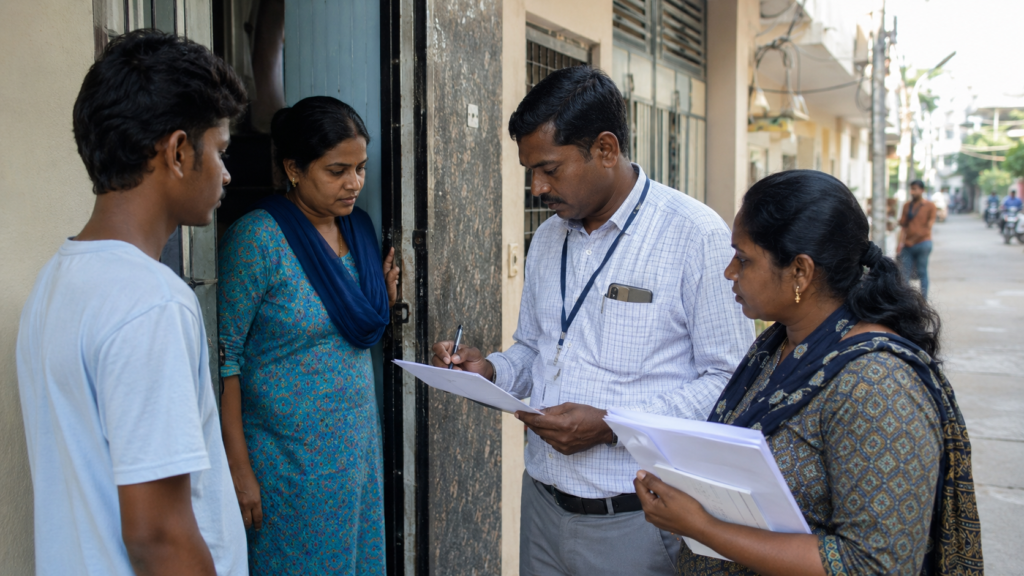
Under the exercise, Booth Level Officers (BLOs) will conduct house-to-house verification, distribute enumeration forms, and assist voters in updating information where necessary.
The revision is part of a broader effort to improve voter database accuracy and address issues arising from migration, urban expansion, demographic changes, and record mismatches.
Preparatory voter mapping has been underway for several months, with officials comparing current voter data against older electoral records and family-linking
Key Details
Election officials have identified 11 categories of anomalies during the verification process.
Some of the commonly observed issues include:
- Duplicate voter entries
- Mismatched family relationships
- Incorrect parent or spouse details
- Inconsistent naming patterns
- Unrealistic age differences among family members
- Address-related discrepancies
- Migration-linked record inconsistencies
Officials have clarified that these anomalies are primarily indicators for verification rather than grounds for immediate deletion from electoral rolls.
According to election authorities, nearly 90% of flagged cases are expected to be resolved through document verification, notices, and hearings.
Hyderabad and Medchal-Malkajgiri Under Spotlight
The findings reinforce a trend already observed during earlier phases of voter mapping.
Hyderabad, Medchal-Malkajgiri, and Rangareddy districts have consistently faced challenges due to:
- High population mobility
- Apartment-based urban living
- Frequent residential changes
- Interstate migration
- Rapid urbanization
Election officials say urban constituencies typically generate higher anomaly rates because maintaining accurate voter records becomes more complex in densely populated metropolitan areas.
For Medchal-Malkajgiri, which has witnessed rapid residential growth over the past decade, the anomaly figures underscore the administrative challenge of keeping electoral rolls synchronized with demographic changes.
Industry and Public Impact
Citizens
Voters may receive notices seeking clarification regarding specific discrepancies.
Residents are advised to cooperate with Booth Level Officers during the upcoming verification process and ensure their details are accurate.
Government
The Election Commission and Telangana Chief Electoral Officer’s office will need to conduct extensive verification exercises before finalizing revised voter rolls.
Political Parties
Political parties are closely monitoring the process because electoral roll accuracy directly affects voter participation and election preparedness.
Infrastructure and Urban Planning
The anomaly data also indirectly reflects rapid urban expansion patterns across Hyderabad’s growth corridors, including Medchal-Malkajgiri, Uppal, Kukatpally, and Serilingampally.
Timeline of Events
| Date | Development |
| Early 2026 | Pre-SIR voter mapping begins |
| June 4, 2026 | Mapping reaches 68.7% coverage |
| June 11, 2026 | Anomaly findings become public |
| June 15–24, 2026 | SIR preparatory activities |
| June 25, 2026 | House-to-house verification begins |
| July 31, 2026 | Draft electoral roll publication |
| Aug 2026 | Claims and objections period |
| Oct 1, 2026 | Final electoral roll publication |
Analytical Table
| Metric | Value |
| Total Electors | 3.39 Crore |
| Mapped Electors | 2.32 Crore |
| Mapping Coverage | 68.7% |
| Flagged Records | 88.13 Lakh |
| State Average Anomaly Rate | 37% |
| Highest Constituency Rate | 78% |
| Expected Resolution Rate | Around 90% |
Data Insights
The concentration of anomalies in Hyderabad-region constituencies suggests that urban voter databases require more frequent updating than rural regions. Migration, redevelopment, apartment housing, and changing addresses continue to be major factors affecting electoral roll accuracy.
Future Outlook
The Special Intensive Revision beginning on June 25 is expected to provide a clearer picture of the actual status of flagged records.
Election officials believe most discrepancies will be resolved through verification and hearings, reducing the number of unresolved cases before publication of the final electoral roll.
The exercise is likely to become one of Telangana’s largest voter database validation efforts in recent years.
Conclusion
The identification of more than 88 lakh voter roll anomalies ahead of Telangana’s Special Intensive Revision highlights both the scale and complexity of maintaining accurate electoral records in a rapidly urbanizing state.
With Medchal-Malkajgiri and several Hyderabad-region constituencies reporting some of the highest anomaly rates.4
The upcoming verification process will play a crucial role in ensuring that eligible voters remain correctly represented in Telangana’s electoral rolls while improving the overall integrity of voter data.