







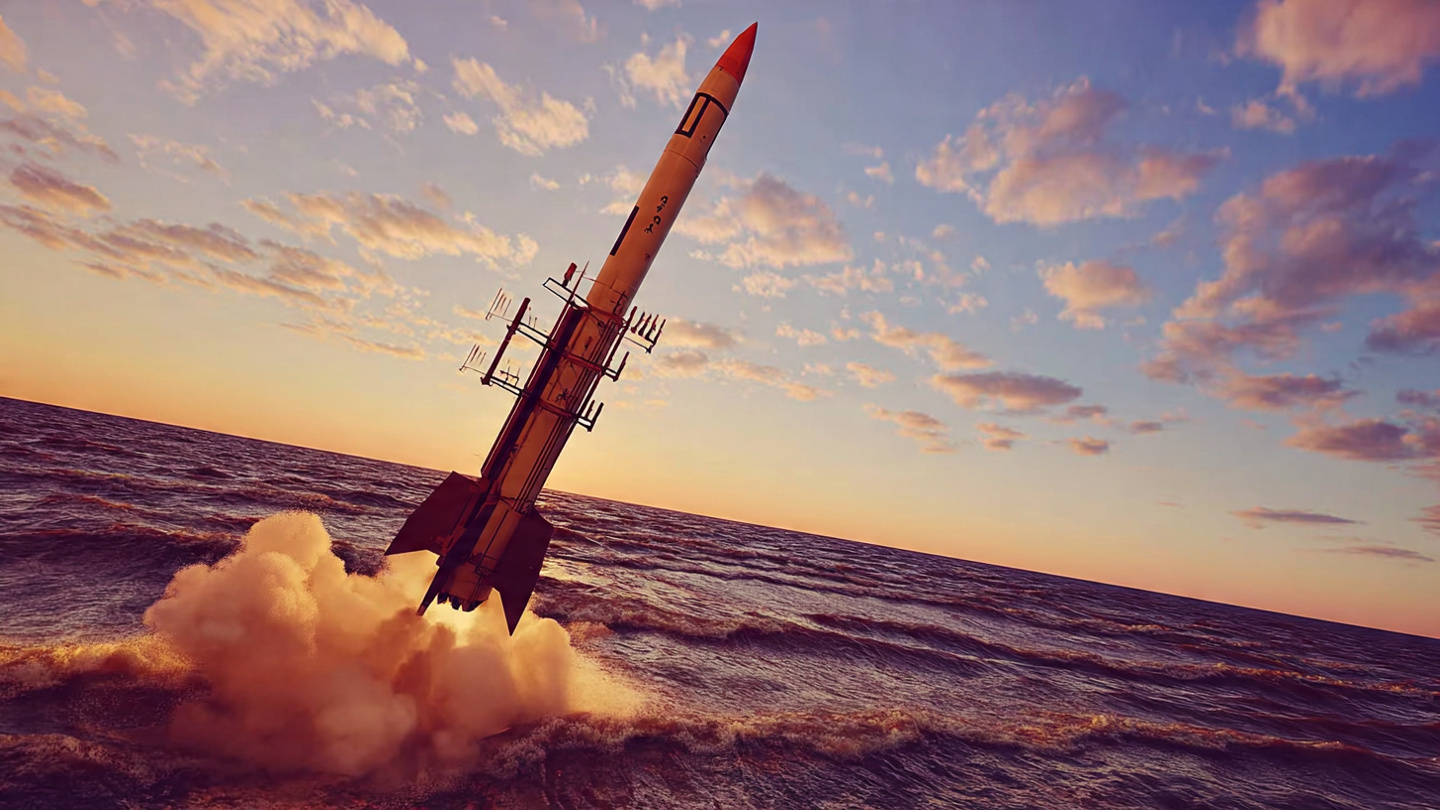
India has achieved a major milestone in defence technology with the successful test of its Solid Fuel Ducted Ramjet (SFDR) system, a capability possessed by only a handful of nations worldwide.
The test was conducted by the Defence Research and Development Organisation (DRDO) at the Integrated Test Range in Chandipur, Odisha, at approximately 10:45 a.m. on February 3, 2026.
This breakthrough places India among an elite group of countries capable of developing ramjet-powered missile systems, a critical technology for next-generation, long-range air-to-air and beyond-visual-range combat weapons.
Ramjet technology is an advanced air-breathing propulsion system that uses the missile’s forward motion to compress incoming air, eliminating the need for rotating compressors found in conventional jet engines.
In a Solid Fuel Ducted Ramjet (SFDR), solid fuel combusts in a controlled manner as atmospheric air passes through the engine, generating sustained high-speed thrust.
This enables missiles to maintain velocity over longer distances—particularly during the crucial terminal phase of flight—making them significantly faster, more agile, and far more difficult for enemy aircraft and missile defence systems to intercept.
During the trial, the missile was first propelled by a ground-based booster to attain the required Mach speed, after which the ramjet propulsion system was activated.
DRDO confirmed that all critical subsystems—including the nozzle-less booster, the SFDR motor, and the fuel flow controller—performed flawlessly throughout the test.
Multiple tracking systems positioned along the Bay of Bengal monitored the missile throughout its flight, with telemetry data confirming the performance of both the propulsion and guidance systems.
Senior scientists from key DRDO laboratories—including the Defence Research & Development Laboratory (DRDL), High Energy Materials Research Laboratory (HEMRL), Research Centre Imarat (RCI), and the Integrated Test Range (ITR)—personally supervised the trial.
Defence analysts say the success carries major strategic significance.
Ramjet-powered missiles retain high kinetic energy until impact, enabling fighter aircraft to strike targets at greater distances while remaining outside hostile engagement zones.
Only a handful of countries have mastered this highly complex technology, which requires precise and stable combustion at supersonic speeds.
