






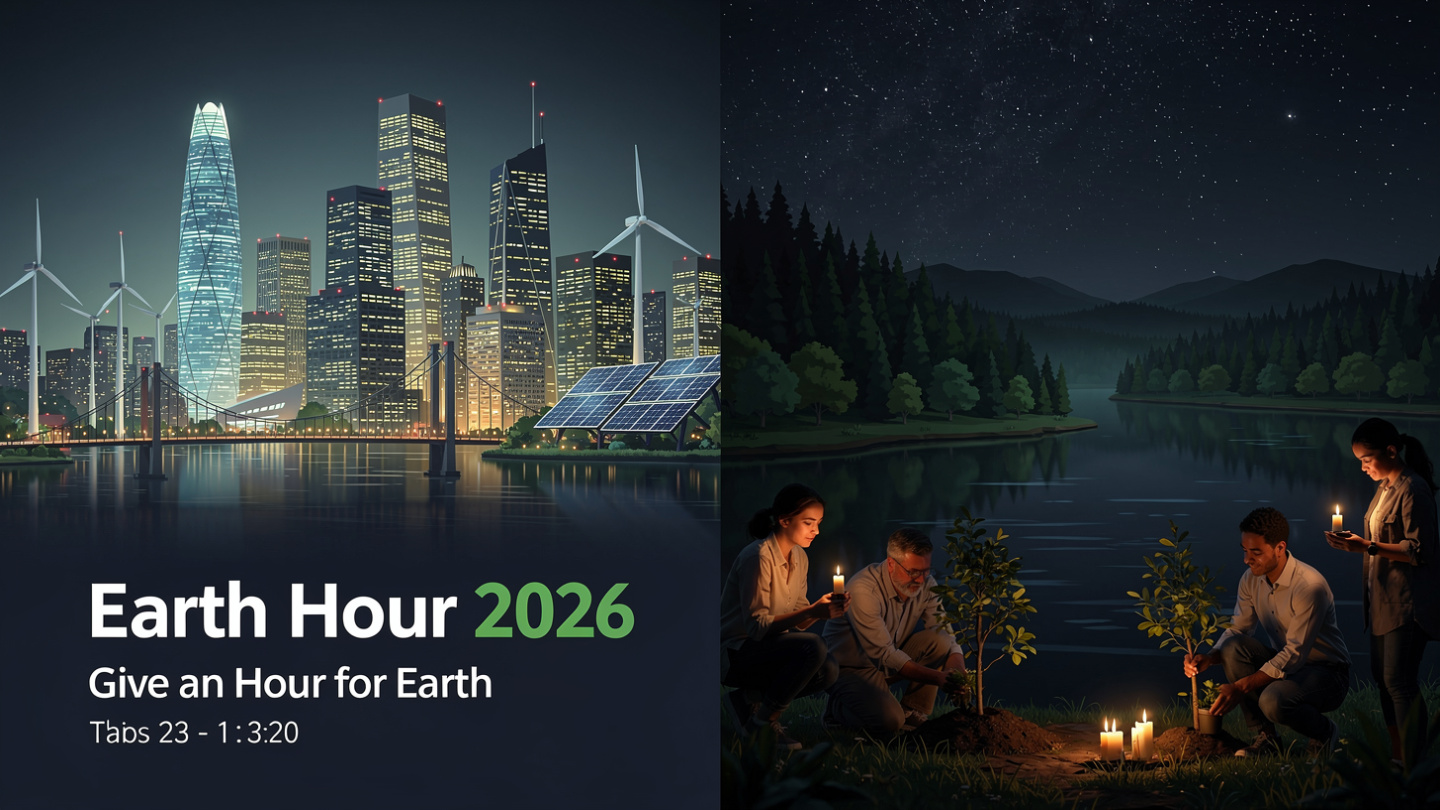
March 28, 2026: Earth Hour 2026, the global environmental movement launched by the World Wildlife Fund (WWF) in 2007, is marking its 20th anniversary today, bringing millions of people, institutions, and governments together under the theme “Give an Hour for Earth.”
Observed annually from 8:30 PM to 9:30 PM local time, Earth Hour encourages individuals, businesses, and public bodies to switch off non-essential lights as a symbolic act of solidarity for the planet.
Over two decades, the initiative has evolved from a simple lights-off event into a wider call for sustained action on climate change, biodiversity conservation, and renewable energy.
A Global Signal for Climate Responsibility
This year, the campaign has drawn renewed international attention, with UN Secretary-General António Guterres describing Earth Hour as a “global signal” of support for clean energy transitions and vulnerable communities facing the brunt of climate change.
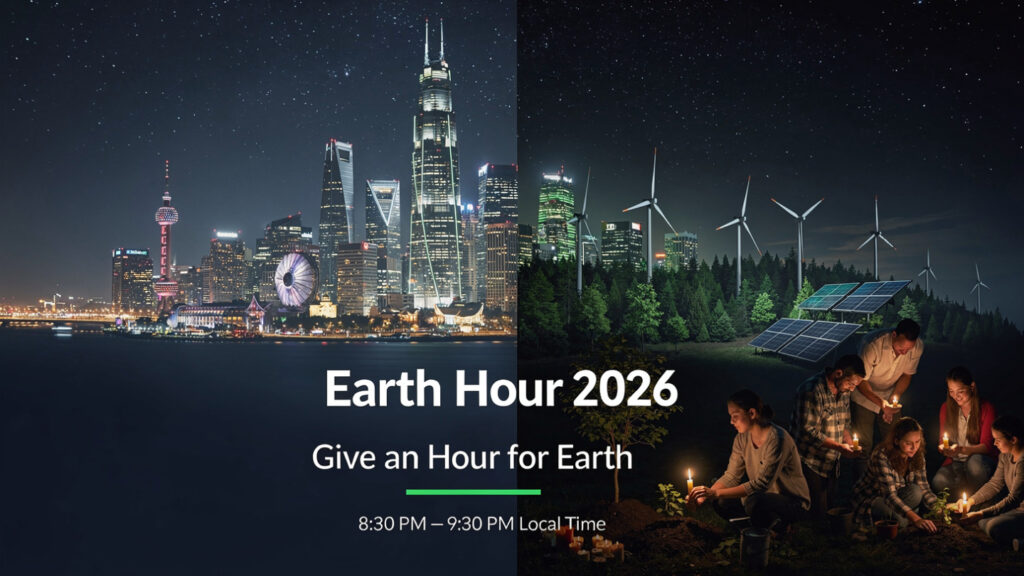
The message resonates strongly in 2026, as countries continue to confront record heatwaves, floods, ecosystem loss, and rising pressure to accelerate the shift toward renewable power.
The anniversary theme urges people not only to turn off their lights but also to dedicate one meaningful hour to actions such as:
- reducing personal energy consumption
- planting trees
- supporting local conservation drives
- learning about climate solutions
- volunteering for sustainability efforts
- advocating for renewable policies
Strong Participation Across South Asia
Earth Hour has seen notable participation across India, where the movement is closely tied to conversations around energy conservation and climate resilience.
In India, the Army, Uttarakhand government, and major urban centres including Hyderabad are among the key participants joining the global event.
Public buildings, monuments, residential communities, and institutions are expected to dim lights in solidarity.Many Asian countries has also amplified the campaign this year, with national and local leaders promoting energy-saving practices amid recurring floods, heatwaves, and climate-linked disasters that continue to affect vulnerable populations.
Environmental observers say the regional participation reflects how Earth Hour is increasingly being localized to address pressing national climate concerns.
Beyond Symbolism: Does Earth Hour Still Matter?
As Earth Hour completes 20 years, debate continues over whether switching off lights for one hour creates measurable environmental impact.
Critics argue that the movement’s direct reduction in emissions is limited and that larger systemic reforms are needed in industry, infrastructure, and governance.
However, WWF maintains that Earth Hour’s greatest strength lies in its ability to mobilize awareness at scale and convert public sentiment into long-term action.
The organization cites previous campaigns that led to:
- community conservation commitments
- creation of protected natural areas
- restoration projects
- renewable energy awareness drives
- stronger public engagement in climate policy
Supporters argue that such symbolic participation often serves as the first step toward deeper behavioral and institutional change.
The Legacy of 20 Years
From its beginnings in Sydney in 2007 to becoming a worldwide annual observance, Earth Hour now stands as one of the most recognized environmental participation events globally.
Its 20th anniversary arrives at a time when the world is balancing urgency with opportunity:
- urgent climate risks
- accelerating renewable technologies
- growing ESG commitments
- stronger youth-led environmental movements
- increasing public pressure for accountability
This year’s message is clear: the future of climate action depends not only on governments and corporations, but on the collective will of ordinary citizens.
As lights dim across skylines tonight, Earth Hour 2026 seeks to remind the world that one hour of intention can still illuminate decades of change.
