







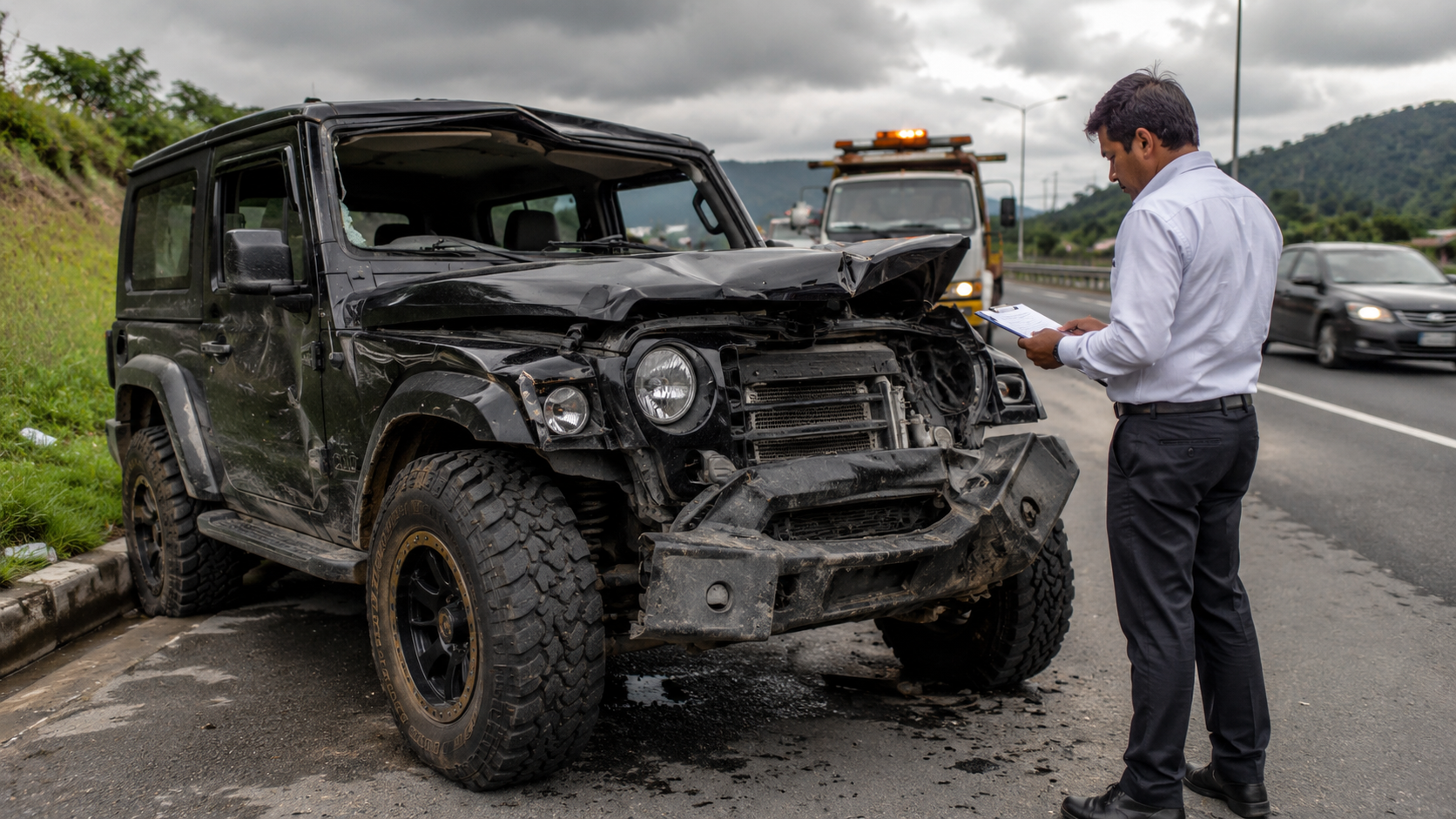
Car Insurance Claim Rejection – A growing discussion among motorists has brought attention to an important but often overlooked aspect of motor insurance in India: vehicle modifications.
Modified Cars Could Face Insurance Claim Rejection if Changes Aren’t Disclosed
Quick Summary
- Undisclosed vehicle modifications can lead to insurance claim rejection.
- Common modifications include aftermarket tyres, alloy wheels, suspension lifts and ECU remapping.
- Insurance contracts require policyholders to disclose material changes affecting vehicle specifications.
- Many vehicle owners remain unaware of this requirement.
- Experts advise informing both the insurer and, where necessary, the Regional Transport Office (RTO) before making significant modifications.
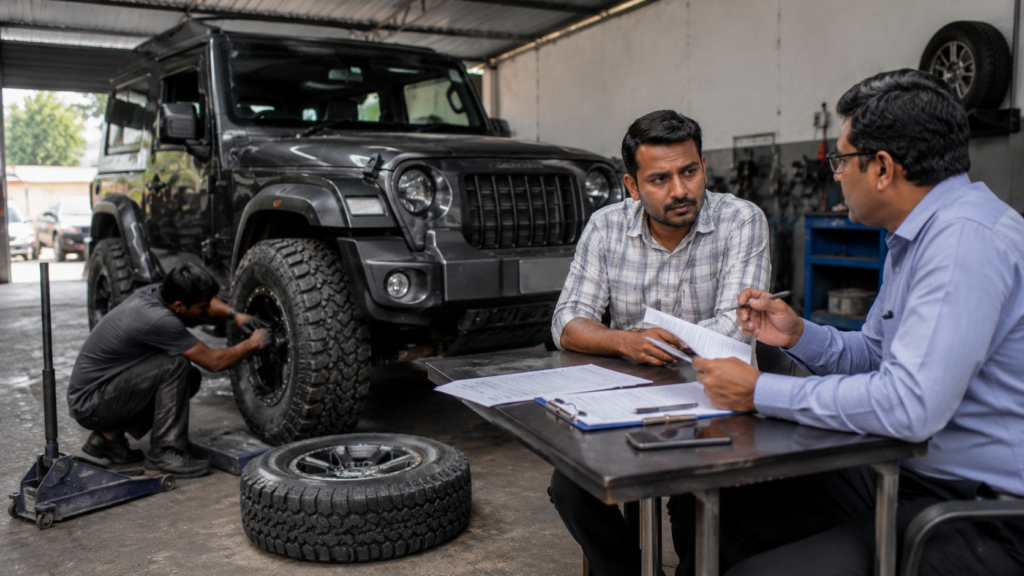
While aftermarket tyres, alloy wheels, suspension lifts, body kits and performance upgrades have become increasingly popular, insurance professionals warn that failing to disclose such changes to insurers may result in a car insurance claim rejection.
The issue has gained traction after a widely shared account described a vehicle owner whose insurance claim was reportedly denied following an accident because the vehicle had been fitted with aftermarket tyres that were not disclosed to the insurer.
Although the specific incident could not be independently verified by HydNewsToday, the broader insurance principle regarding undisclosed vehicle modifications is well established.
What Happened?
According to the widely circulated account, the owner had purchased a Mahindra Thar worth approximately ₹19 lakh and later installed larger aftermarket tyres.
Months later, the vehicle was involved in a serious accident.
While the owner survived, the insurance claim was reportedly rejected after the insurer determined that the vehicle had undergone a material modification which had not been declared when the policy was issued or during its validity.
Insurance experts note that insurers assess vehicles based on their declared specifications. Significant changes to those specifications may alter the level of risk originally accepted by the insurer.
Why It Matters
Many Indian vehicle owners routinely modify their cars for improved appearance, off-road capability or performance.
Popular modifications include:
- Bigger tyres
- Alloy wheels
- Suspension lift kits
- Performance exhaust systems
- ECU remapping
- Body kits
- Auxiliary lighting
- Engine tuning
While these modifications are widely available through dealerships and aftermarket workshops, owners may not always realise that insurance policies generally require disclosure of material modifications.
Failure to do so can complicate or jeopardise claims.
Background Context
Motor insurance is based on the principle of utmost good faith, requiring both insurers and policyholders to provide complete and accurate information.
When a vehicle’s specifications change substantially after policy issuance, insurers may reassess:
- Vehicle value
- Risk profile
- Premium payable
- Coverage terms
Industry guidance indicates that undisclosed modifications may result in:
- Claim rejection
- Policy cancellation
- Exclusion of modified parts from compensation
- Additional legal issues if modifications also violate motor vehicle regulations.
Key Details
Vehicle owners should generally inform their insurer before or immediately after making significant modifications, particularly those affecting:
Exterior
- Larger tyres
- Wider wheels
- Alloy wheels
- Body kits
- Roof racks
Suspension
- Lift kits
- Lowering kits
- Shock absorber upgrades
Engine
- Turbochargers
- ECU remapping
- Performance tuning
Electrical
- High-powered lighting
- Additional electronics affecting vehicle systems
Structural
- Roll cages
- Winches
- Major chassis alterations
Insurance companies may revise premiums, update policy conditions or endorse the modifications on the existing policy.
Hyderabad and Telangana Relevance
Hyderabad has one of India’s fastest-growing communities of SUV enthusiasts and off-road vehicle owners. Popular models such as the Mahindra Thar, Force Gurkha, Toyota Fortuner and Isuzu V-Cross are frequently customised with aftermarket accessories.
For vehicle owners in Hyderabad and across Telangana, the issue carries significant importance because:
- Vehicle modification workshops are widespread.
- Off-road accessories have become increasingly popular.
- Many owners may not notify insurers after modifications.
- Any future accident claim could become more complex if modifications remain undisclosed.
The Insurance Regulatory and Development Authority of India (IRDAI), headquartered in Hyderabad, regulates India’s insurance industry and frames policyholder protection regulations.
Industry and Public Impact
For Citizens
- Potential denial of expensive insurance claims.
- Unexpected financial liability after accidents.
For Insurance Companies
- Greater scrutiny of modified vehicles.
- Increased focus on policy disclosure requirements.
For Dealerships
- Opportunity to better educate buyers regarding insurance implications of aftermarket accessories.
For Modification Workshops
- Greater emphasis on advising customers about insurer notification requirements.
What Should Vehicle Owners Do?
Insurance specialists recommend the following precautions:
- Inform your insurer in writing before or immediately after any significant modification.
- Obtain written acknowledgement from the insurer.
- Update the policy endorsement if required.
- Retain invoices for all modifications.
- Confirm whether RTO approval is necessary for specific alterations.
- Review your policy wording carefully before undertaking major upgrades.
Timeline
| Stage | Event |
| Vehicle purchase | Standard insurance policy issued |
| Modification | Aftermarket accessories installed |
| Accident | Vehicle sustains damage |
| Survey | Insurer inspects vehicle |
| Claim review | Undisclosed modifications assessed |
| Outcome | Claim may be accepted, reduced or rejected depending on policy terms and circumstances |
Future Outlook
As vehicle customisation continues to grow in India, insurance awareness is expected to become increasingly important.
Industry observers believe insurers may place greater emphasis on educating policyholders regarding disclosure obligations, while consumers are likely to pay closer attention to policy conditions before investing in expensive aftermarket upgrades.