








Mythos Cyber Threat – India Strengthens Cyber Defences Against Emerging Cyber Ai Threat
India has stepped up efforts to secure its digital infrastructure against the rapidly evolving Mythos cyber threat, an advanced artificial intelligence system capable of discovering and exploiting hidden software weaknesses faster than traditional cybersecurity teams.
Government agencies, technology firms, and financial institutions are now working together to test the resilience of key digital systems, including Aadhaar and government authentication platforms, amid growing global concerns over AI-driven cyberattacks.
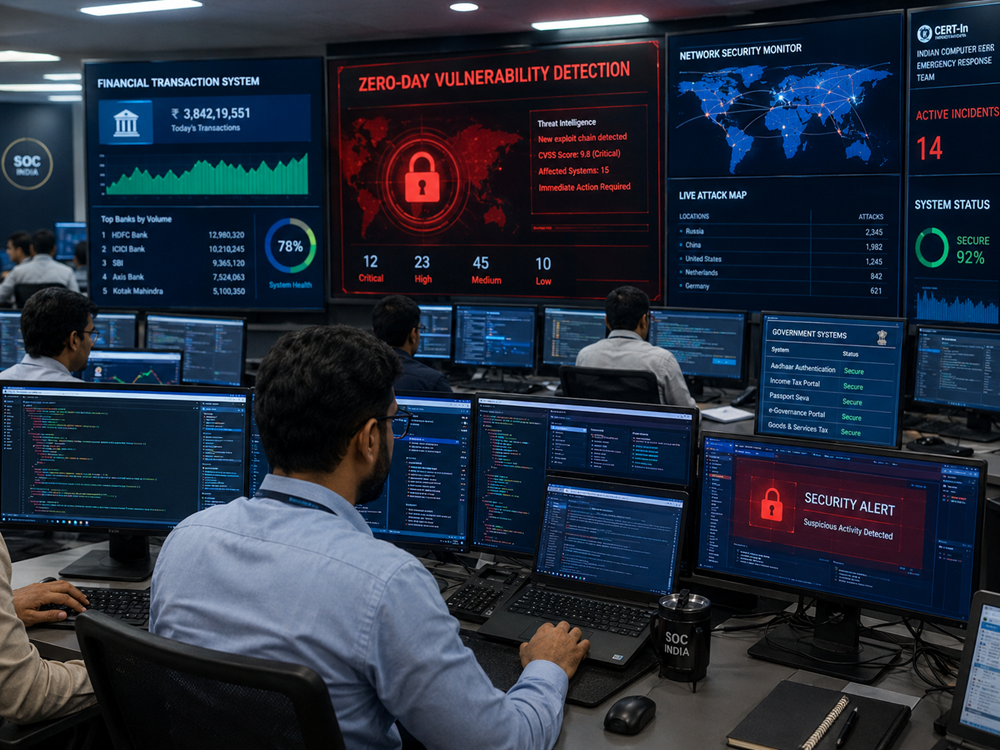
The concern revolves around “Mythos,” a next-generation AI model reportedly developed by Anthropic.
Security experts say the system has demonstrated the ability to independently identify “zero-day vulnerabilities” hidden software flaws unknown even to developers.
Why the Mythos Cyber Threat Matters
The Mythos cyber threat is being closely watched because of its unprecedented speed and automation.
Unlike traditional hacking methods that may take weeks or months of manual work, the AI can reportedly scan large amounts of software code and uncover exploitable weaknesses within hours.
India’s banking networks, digital identity systems, telecom infrastructure, and online government services are all heavily dependent on interconnected software systems.
A successful breach in any of these areas could disrupt essential services used daily by millions of citizens.
According to reports, India’s national cybersecurity agency CERT-In, along with companies such as Infosys and Tata Consultancy Services (TCS), are conducting controlled security assessments to prepare for possible AI-driven attacks.
Since direct access to the Mythos system is currently unavailable, the companies are using Anthropic’s Claude Opus 4.7 model to simulate and study potential AI-driven cyber risks.
“AI is reducing the time between discovery and exploitation, putting enormous pressure on organisations to react faster,” cybersecurity experts warned during recent discussions on emerging digital risks.
Banks and Government Agencies Increase Vigilance
The Reserve Bank of India (RBI) has reportedly held meetings with banks to assess risks linked to the Mythos cyber threat and improve coordination during cyber emergencies.
Officials are particularly concerned about:
- Financial transaction systems
- Aadhaar-linked services
- Government login portals
- Telecom networks
- Cloud-based public infrastructure
CERT-In has also advised organisations to speed up software patching and vulnerability response times, as AI-driven threats can exploit weaknesses far quicker than conventional cyberattacks.
Global Concern Over AI-Powered Cybersecurity Risks
The issue is not limited to India.
Governments and technology companies worldwide are examining the security implications of advanced AI systems capable of autonomous cyber operations.
Anthropic reportedly launched “Project Glasswing,” a restricted-access initiative allowing selected governments and organisations to study the AI’s cybersecurity capabilities in controlled environments.
Participants include major global technology and cybersecurity firms.
Experts believe the rise of the Mythos cyber threat marks a major shift in digital warfare, where AI systems could eventually battle other AI systems in real time to defend or attack networks.
India’s Next Cybersecurity Challenge
India’s rapid digital expansion through platforms such as Aadhaar, UPI, and online public services has brought convenience and economic growth, but it has also increased exposure to cyber risks.
Cybersecurity analysts say the country now faces a critical challenge: ensuring that defensive systems evolve as quickly as AI-powered threats.
The growing attention around the Mythos cyber threat highlights the urgent need for stronger cybersecurity infrastructure, faster incident response systems, and advanced AI-based digital defence mechanisms.
Project Glasswing and Restricted Access
Anthropic introduced Project Glasswing alongside the Mythos Preview program, providing controlled access to nearly 50 selected organisations and government bodies worldwide.
Among the participants are the UK government, Mozilla, Palo Alto Networks, and Cloudflare, all of which are evaluating the cybersecurity capabilities and risks associated with the advanced AI system.
According to Cloudflare, the model demonstrated the ability to identify software vulnerabilities, build exploit chains, and even create proof-of-concept demonstrations for detected flaws.
The restricted-access initiative is designed to help governments and cybersecurity experts better understand the potential impact of AI-driven cyber threats while maintaining strict security controls.