







Delhi Women Entrepreneurship Scheme Opens a New Chapter for Women Entrepreneurs
In a landmark move designed to strengthen financial inclusion and support grassroots entrepreneurship, the Delhi government has unveiled a major support initiative for women-led enterprises and Self-Help Groups (SHGs).
Also Read – PM MUDRA YOJNA / National Rural Livelihoods Mission (NRLM)
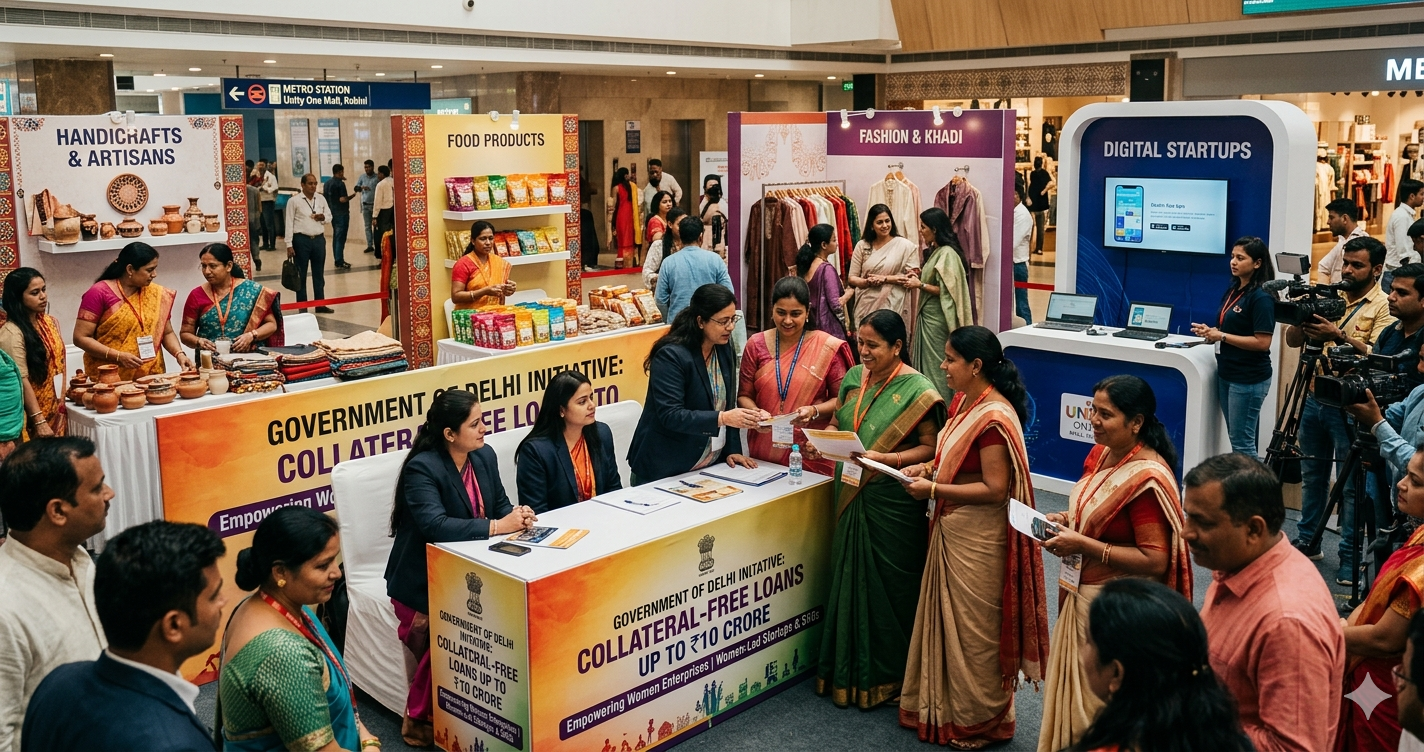
Announced during the Mega Self Help Group (SHG) Mela-2026 at Unity One Mall in Rohini, the policy is being viewed as a transformative step toward empowering women economically.
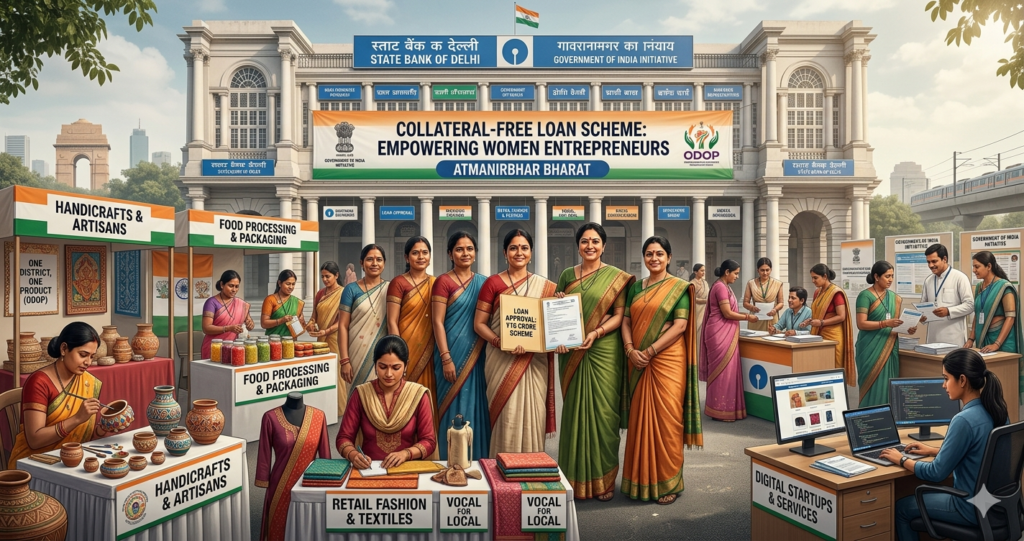
At the center of the announcement is the Delhi Women Entrepreneurship Scheme which promises collateral-free institutional loans of up to ₹10 crore for eligible women-led businesses and SHGs.
More importantly, the Delhi government itself will act as the guarantor, helping applicants overcome one of the biggest barriers in accessing formal credit — the need to pledge property or other assets as security.
The move is expected to benefit thousands of women entrepreneurs operating in both urban and semi-urban sectors.
Why the Delhi Women Entrepreneurship Scheme Matters
For years, many women entrepreneurs have struggled to secure loans from banks due to the absence of collateral or formal financial history.
The Delhi Women Entrepreneurship Scheme directly addresses this challenge by reducing risk for lending institutions and creating a more accessible financial environment.
The initiative could significantly improve participation of women in the formal economy while also encouraging small businesses to scale operations, generate employment, and adopt digital platforms.
“Economic empowerment begins when financial access becomes inclusive and barrier-free,” the announcement emphasized during the SHG Mela.
Key Features of the Delhi Women Entrepreneurship Scheme
💰 Financial Assistance
- Collateral-free loans up to ₹10 crore
- Available for women-led startups and Self-Help Groups
🏛 Government Guarantee
- Delhi government to serve as guarantor
- Removes dependence on property-based loan approvals
📈 Focus on Financial Inclusion
- Encourages formal banking participation
- Reduces dependence on informal lenders and high-interest borrowing
Sectors Expected to Benefit
The Delhi Women Entrepreneurship Scheme targets sectors where women already play a strong entrepreneurial role but often lack institutional support.
Key sectors include:
- 🧵 Handicrafts and Khadi products
- 🍱 Food processing and home-based manufacturing
- 👗 Fashion and small-scale retail businesses
- 💻 Digital businesses and online entrepreneurship
Experts believe the initiative can create a ripple effect by strengthening local supply chains, promoting self-employment, and increasing women’s participation in digital commerce.
Alignment with National Economic Missions
The policy also complements several major national economic initiatives aimed at strengthening domestic production and local enterprise development.
The initiative aligns with:
- Atmanirbhar Bharat (Self-Reliant India)
- Vocal for Local
- One District, One Product (ODOP)
By integrating local entrepreneurship with formal credit systems, the Delhi Women Entrepreneurship Scheme could become a model for other states looking to strengthen women-led economic ecosystems.
Understanding the Core Concepts
For students preparing for civil services or competitive examinations, the announcement highlights several important economic and governance concepts.
Important Terms
Self-Help Groups (SHGs)
Small informal groups, usually consisting of women, who collectively save money and access livelihood loans for small-scale economic activities.
Collateral-Free Loans
Loans issued without requiring borrowers to pledge assets such as land, gold, or property as security.
Institutional Credit
Loans provided through formal banking and financial institutions instead of private money lenders.
A Potential Turning Point for Women-Led Growth
Economists and policy observers believe the Delhi Women Entrepreneurship Scheme may significantly improve credit accessibility for women at the grassroots level.
If implemented effectively, the initiative could strengthen local industries, encourage innovation, and create sustainable employment opportunities.
The scheme also reflects a broader shift in governance priorities—from welfare support to long-term economic empowerment through entrepreneurship.
As India increasingly focuses on inclusive growth, initiatives like this may redefine how urban and community-based enterprises access capital and participate in the country’s development story.